life span of Tang dynasty emperor
Data visualization
life span of Tang dynasty emperor
Adobe illustrator
Adobe photoshop
Procreate
The selected data for visualization depicts the cause of death among Chinese emperors during the Tang dynasty (618 to 907 AD). The main focus of this analysis is to examine the relationship between their lifespan and political or religious factors. The dataset includes information such as the personal and temple names of the emperors, their ages, religions, and the causes of death. The analysis covers three sub-categories, including the murder rate, their recorded health conditions, and whether they were officially recorded for taking alchemical medicines.
In ancient China, Taoism gained influence among the upper classes due to its concept of seeking internal life. Taoism believed that ingesting long-lasting mineral substances could create elixirs for immortality, leading to longevity. As a result, Chinese alchemy included toxic ingredients like mercury, sulfur, and arsenates in their "life elixir" ingredients. To legitimize their regime and attract followers, the founder of the Tang dynasty, Liyuan, claimed to be descended from the Taoist sage Laozi (originally named Li er), leading to Taoism becoming the state religion. During this period, at least 13 emperors (11 belonging to house Tang) were officially recorded as taking alchemical medicines, and at least five of them died directly or indirectly from a medicine overdose. This composed the third most common cause of death among the ruling class, almost equivalent to the murder death rate within the Li family.
Basic Info & Cause of Death
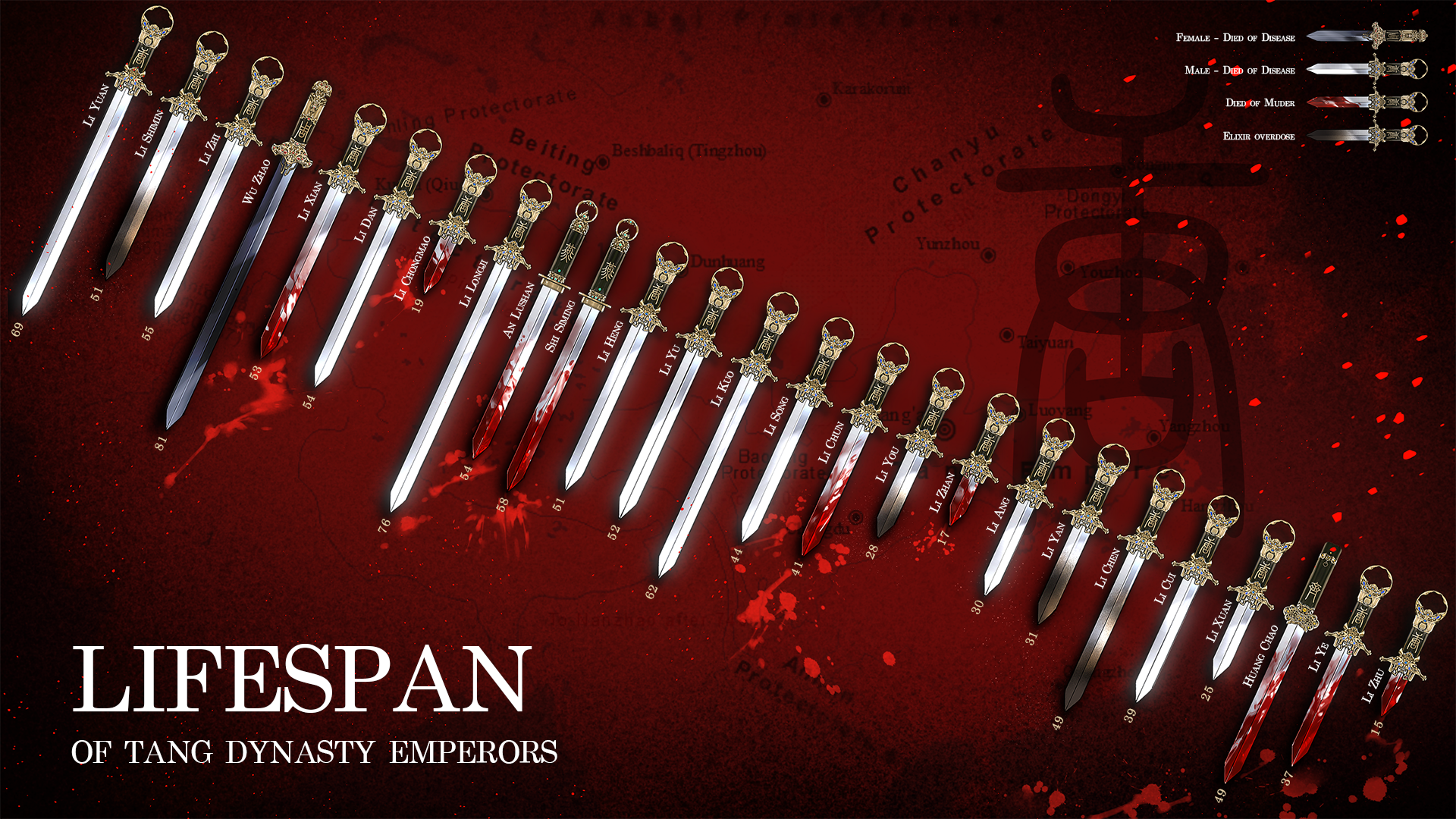
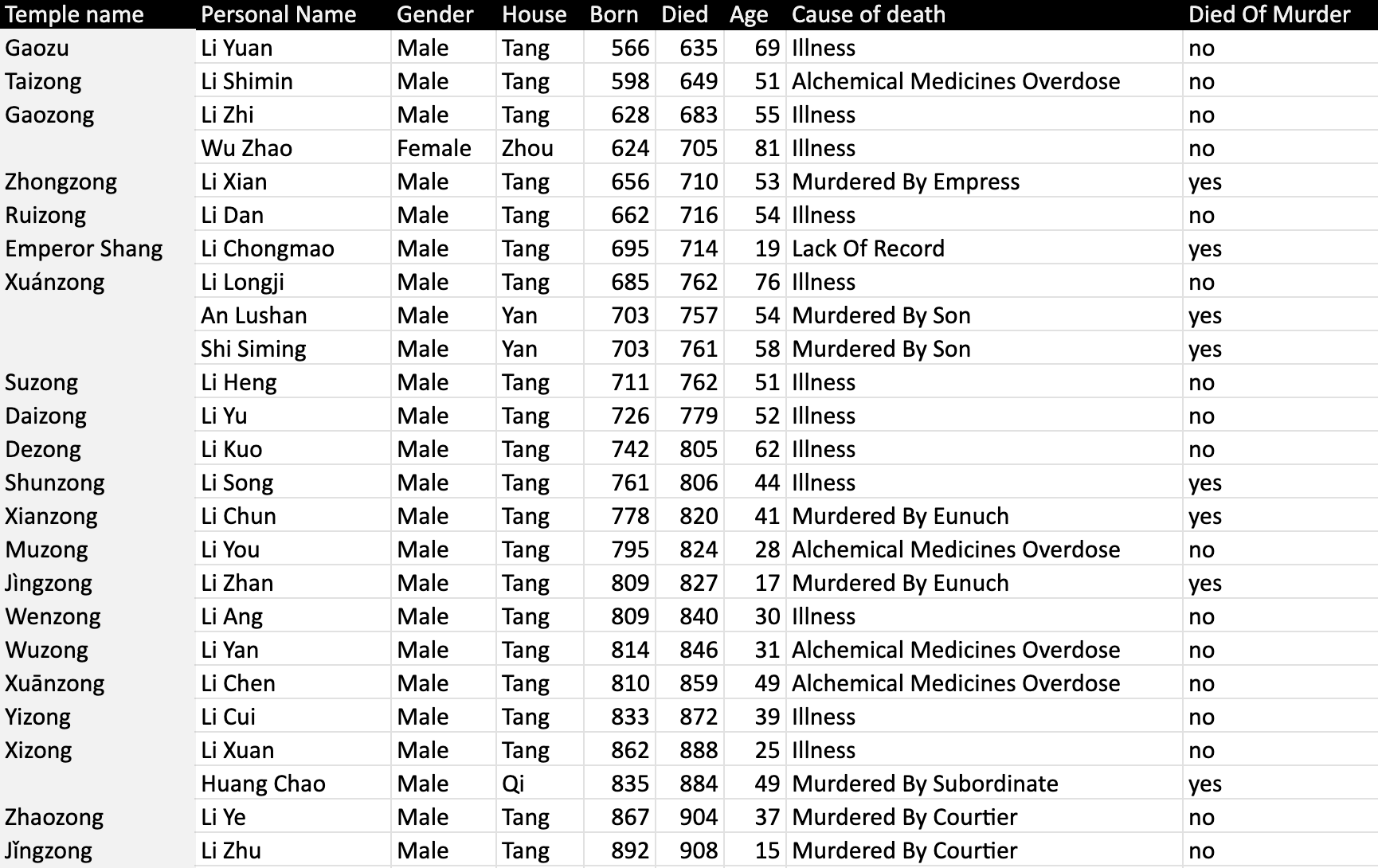
The first table includes basic information about each emperor, with four additional emperors from independent regimes during this era added as a comparison reference. The Tang Dynasty lasted for a total of 289 years, with an average lifespan of 46 years old for each emperor and 43 years old for those from house Tang. There were 25 male emperors and one female emperor, who is the only female emperor in Chinese history.
Murder rate & Population
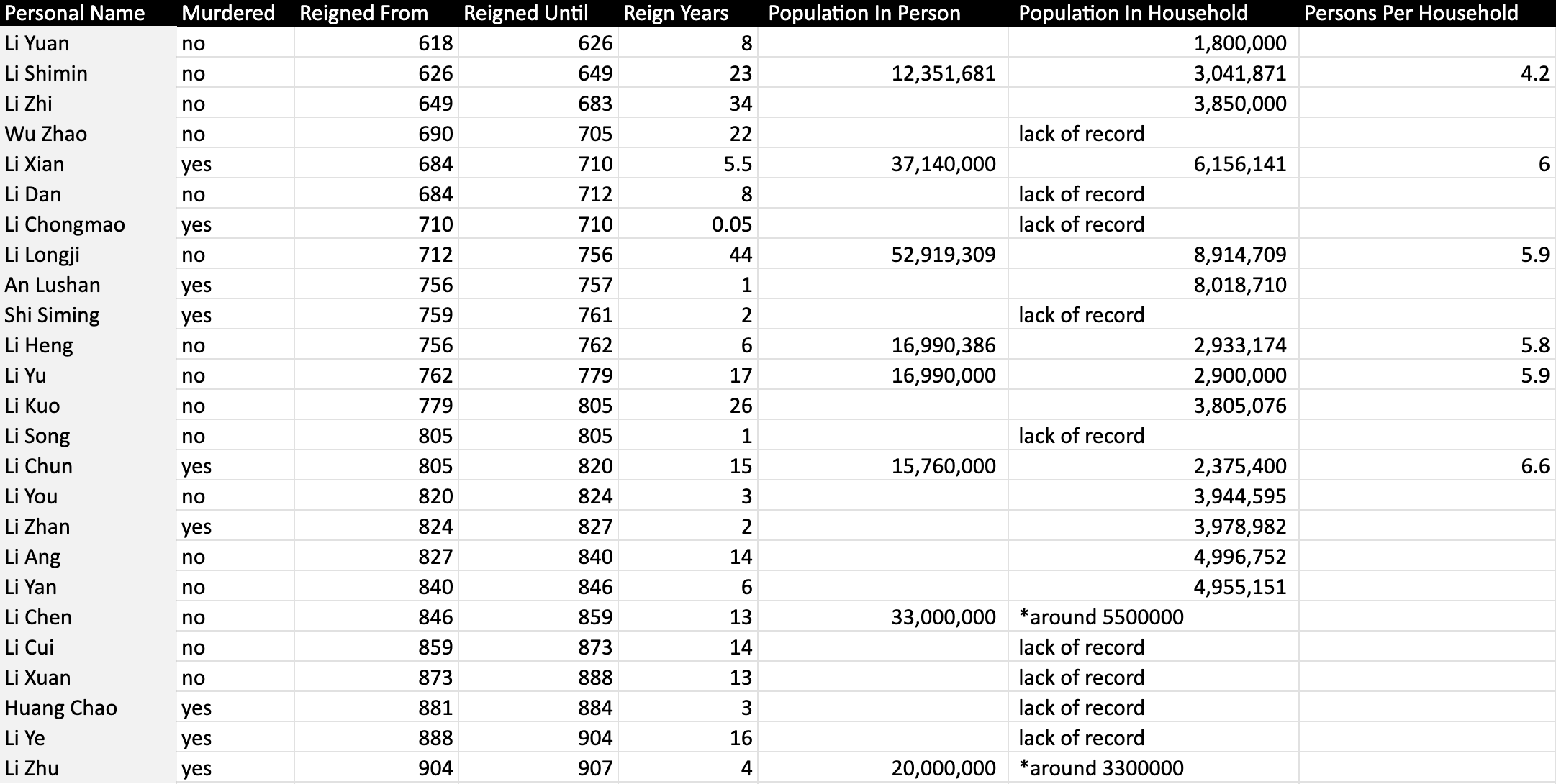
Assassination is the second leading cause of death among sovereigns, and it tends to occur more frequently when the central government's influence is weaker. To illustrate the fluctuations in regime stability, I use population data during each emperor's reign as evidence to demonstrate the level of political stability.
Drugged rate & Religion
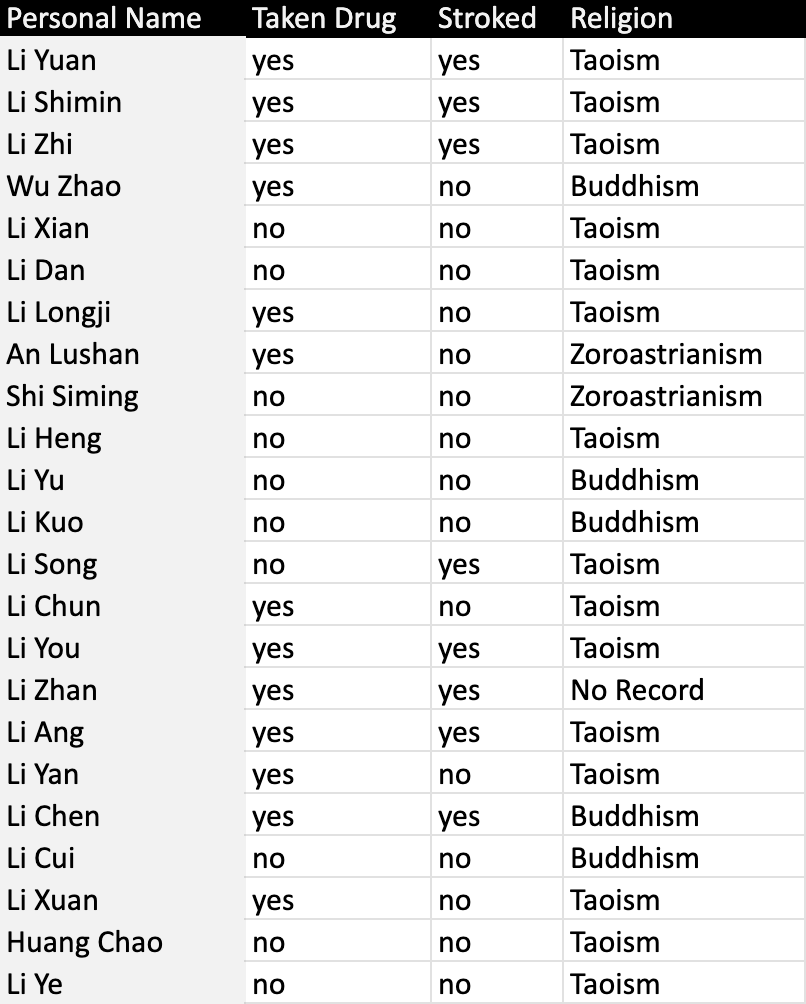
Although the motivations may have varied, it is a common occurrence in Chinese history prior to the 9th century for emperors to die as a result of excessive alchemical medicine. In the second table, I have compiled a list of every emperor who was recorded as having taken such medicines, along with their health conditions and religious beliefs. My goal is to determine the reasons behind their self-destructive behavior of consuming these drugs.
Religion
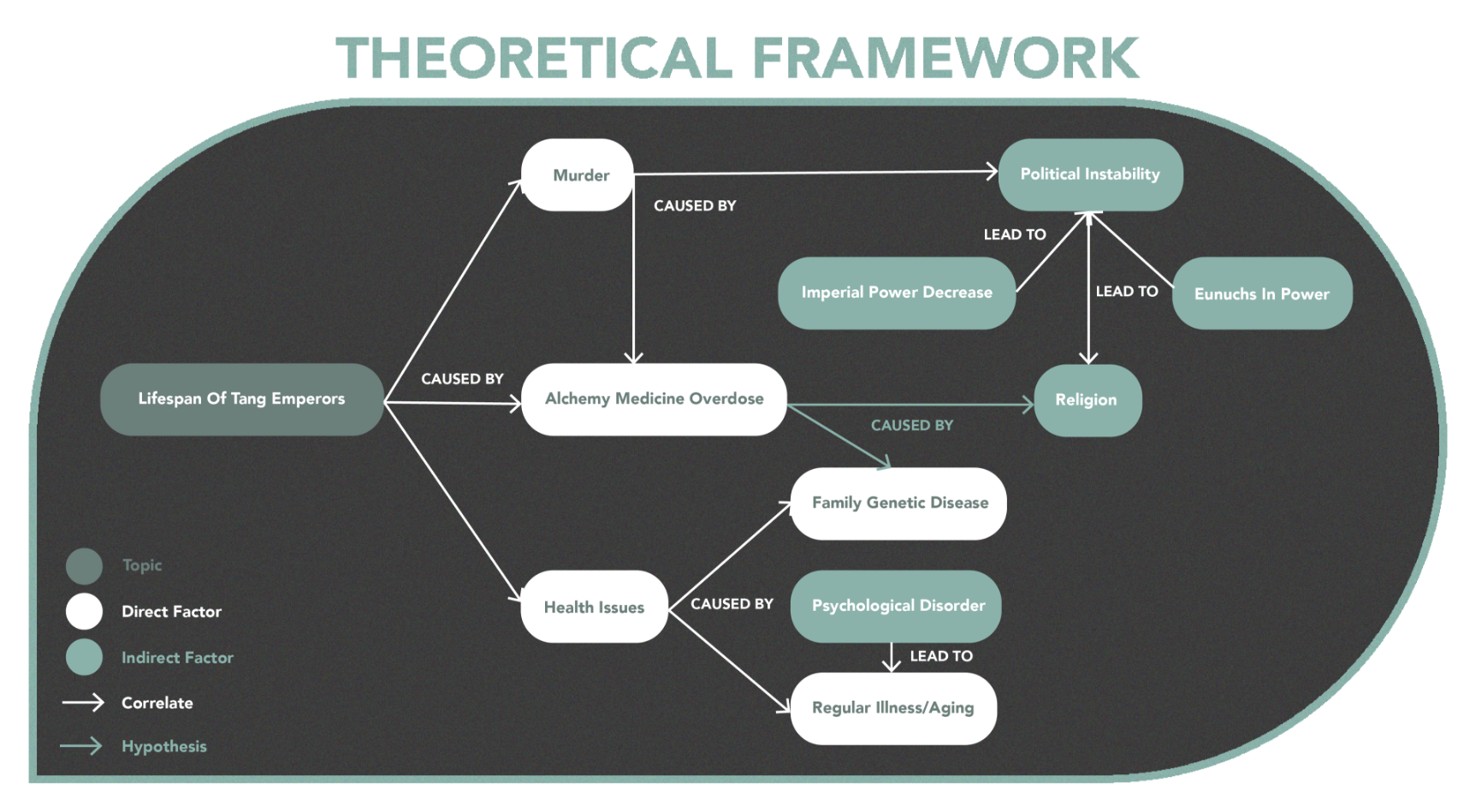
Religion-related legal reformed for imperial power consolidation. (Huchang Persecution of Buddhism) Might have indirectly relative with personal death.
Political Instability
Political instability leads to border rebellions and imperious courtiers, even leading threaten to emperor’s life.
Taken alchemy medicine
Taken alchemy medicine is the tradition of Taoism, at least 4 were directly died of heavy metal overdose.
Family Genetic disease
Stroke is the family genetic disease of Li family, 8/21 was recorded with the symptoms.
As my focus is on the cause of death of Tang Dynasty emperors, my research has revealed that almost half of them died from excessive intake of heavy metals through elixirs. It seems that two main factors were at play: poor health conditions and living in a period of active inter-religious exchanges. The chaotic political environment of the time may have also contributed to those in power seeking religious assistance. Additionally, an unhealthy physical state could cause instability to imperial power, such as a young heir without dominant ability or an emperor’s power being subjected to supporters, especially eunuchs who held significant power in the Tang dynasty, even commanding armies. Thus, I propose that lifespan was determined by three main factors: the political environment, religion, and health status. My hypothesis is that the consumption of alchemy medicine is linked to their activity in religion and their health condition.
Psychological disorder
Several example as was speculate as died of depression or anxiety.
Border rebellions
After An Lushan Rebellion, many border general became independent from the central government.
Not relative with cause of personal death.
Eunuchs in power
Eunuchs were vied for power with military leaders from middle of the Tang., which even provided them the ability to depose the emperors.
Aging
12/25 died of aging or other illness, without more detailed record.
Health Issues
16/25 died of specific illness.
Theoretical Framework Journey
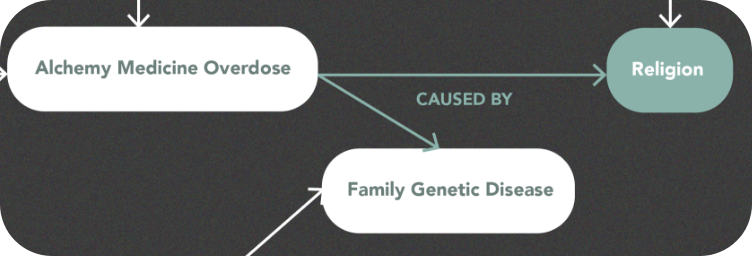
In the table presented previously, the high rate of strokes among Tang emperors coincides with the high rate of drug-taking. It appears that many emperors invited alchemists to the palace to seek a cure for their strokes. Some, such as Li Longji and Wu Zhao, even consumed elixirs as a health supplement to achieve longevity. Hence, I believe that the most common reason for taking alchemy elixirs is for their medicinal properties.The Tang Dynasty was founded by the Xianbei people, a Proto-Mongolic ancient nomadic group, who were known for their high tolerance towards foreign religions. It is possible that the Taoist religion might have influenced the rate of alchemy medicine consumption. However, based on the available statistics, rulers from other religions, such as Zoroastrianism and Buddhism, were also recorded to have consumed these drugs. This leads me to believe that drug-taking was more of a social trend or a treatment approach based on the prevailing circumstances rather than a specific religious ritual.
Based on the data collected, it can be seen that some emperors had a family history of stroke and other health issues, which might have led them to take alchemy medicine as a cure or supplement. Additionally, Taoism, which had a strong influence in the Tang era, promoted the use of alchemy as a means of achieving immortality. However, it should be noted that the use of alchemy medicine was not limited to Taoists or those with health problems, as some rulers took it as a way to enhance their physical and mental abilities. Nonetheless, it is evident that the prevalence of alchemy medicine was due to a combination of cultural and environmental factors, and the motivations behind its use varied among individuals.
Based on the theoretical framework, the three main direct factors were categorized as murder, alchemy medicine overdose, and health problems. Health conditions could result in death from regular illness, aging (details unrecorded in any official historical book), or family genetic disease. In the reference material I found, at least 8 of all Tang emperors were recorded with stroke symptoms. Therefore, it can be assumed that the Li family has a genetic history of stroke. For example, Wu Zhao and Li Heng were generally speculated to have died of depression or anxiety, as there was no official record. I categorize psychological disorder as an indirect factor that leads to death by regular illness.Murder formed the second most common reason that led to the death of Tang emperors, including 9 out of 25 in total, and 6 out of 21 (or 7 out of 21) in the House of Tang. After the An Lushan rebellion in 755, the Tang Empire lost 68% of the registered population (from 52,919,309 of the total population in 554 decreased to 16,990,386 in 760), and the ruling regime was disastrously influenced by this revolt. The weakening of the central power led to border rebellions frequently uprising in the latter Tang, and eunuchs started to gain the capability of leading the army. Political instability led to murder and assassinations occurring repeatedly after the 9th century. From the table on the left, we can see that murder often happens during a period of population decrease (or even lack of record due to constantly happening revolts).
One exception to the previously mentioned data is Li Xian from the statistic in 705. He obtained the throne by Shenlong coup d’état, which only affected families in central power. The lower class was not affected.
Hypothesis
Life Span, House, Gender and Death Cause
As shown in the chart, there were a total of 25 sovereigns throughout the Tang Dynasty, including 21 from the Li family and 4 from the Wu family. The average lifespan of the Tang emperors was 44.92 years, with the shortest reign being only 1 year, and the longest reign being 61 years.It can be seen from the chart that the most common cause of death for Tang emperors was alchemy medicine overdose, accounting for 12 out of the 25 sovereigns, followed by murder, accounting for 9 out of 25. The remaining 4 emperors died due to health problems, with stroke being the most common cause.It is also noteworthy that Wu Zhao, the only female sovereign in Chinese history, is highlighted in black, as her reign was controversial and she faced significant opposition during her time in power.
Religion, Stroke Rate and Elixir Taken Rate
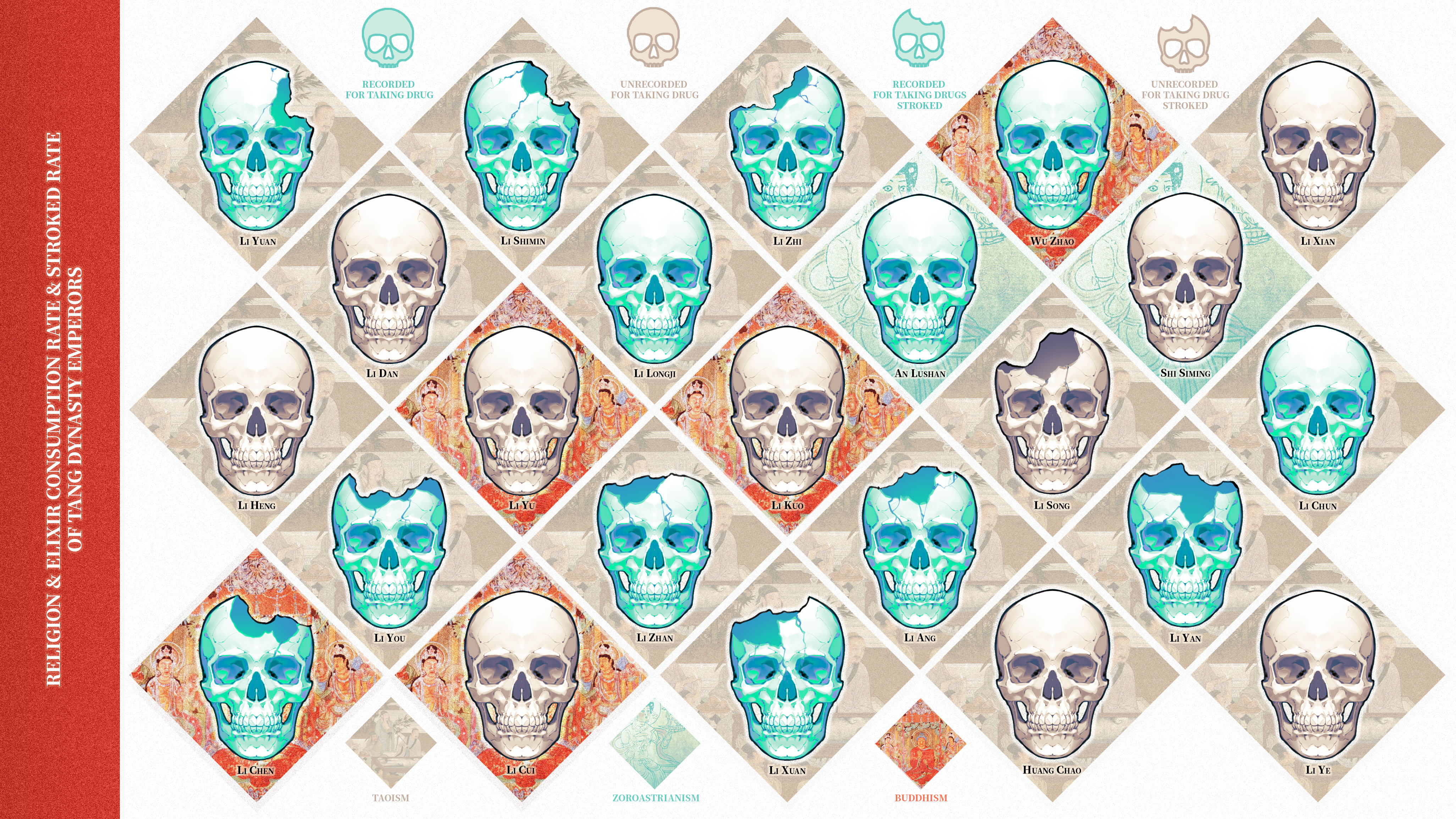
In this chart, I aimed to visualize the relationship between the rate of elixir consumption, the incidence of strokes, and the religion of each ruler. The personal religion of each ruler is represented by the background texture of the religious painting surrounding their portrait, while the skulls are color-coded to indicate whether or not the ruler was officially recorded as having consumed elixir. The most common cause of death, strokes, is represented by a broken skull, inspired by skull removal surgeries that were believed to aid in stroke recovery. I have excluded Li Chongmao and Li Zhu from this chart as there is insufficient information documented in the official history book about them. Both were nominal rulers who were puppeted by other powers and died before the age of 20.
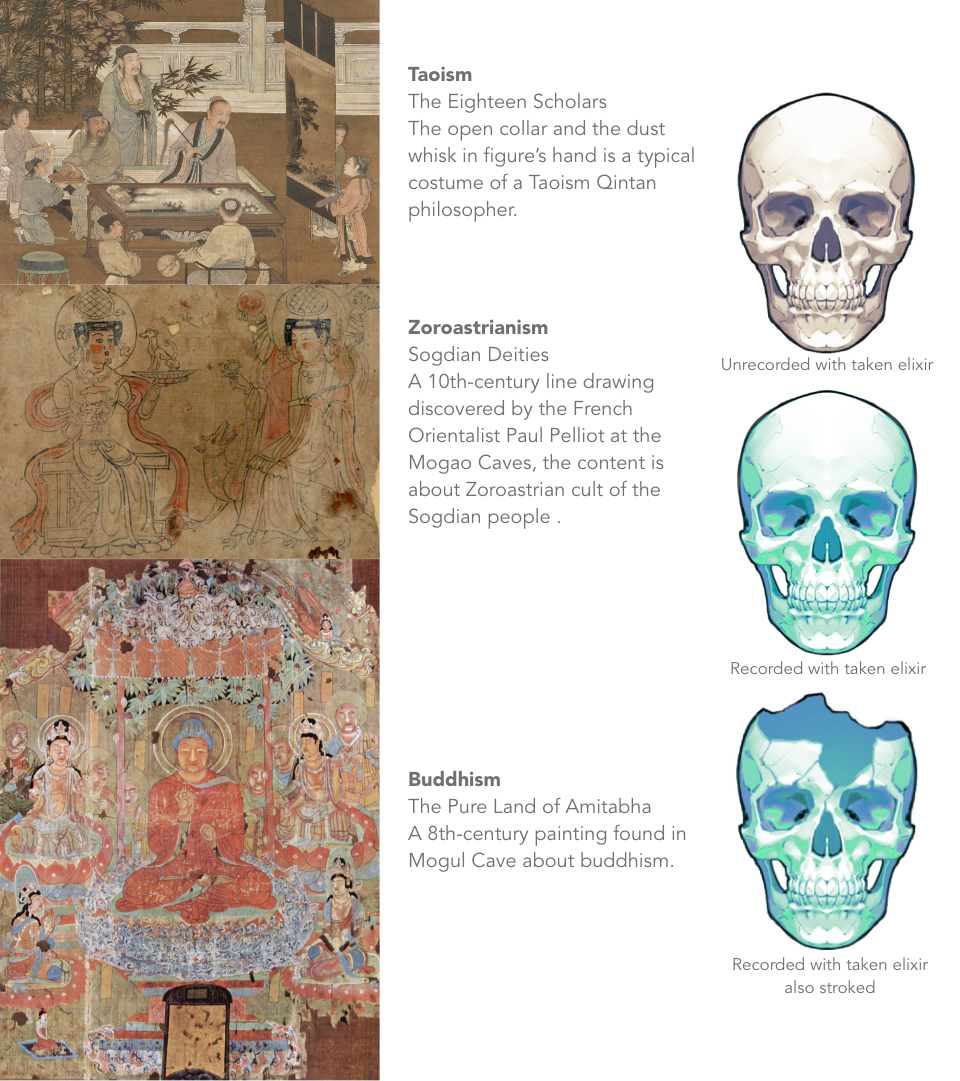
Religion, Stroke Rate and Elixir Taken Rate
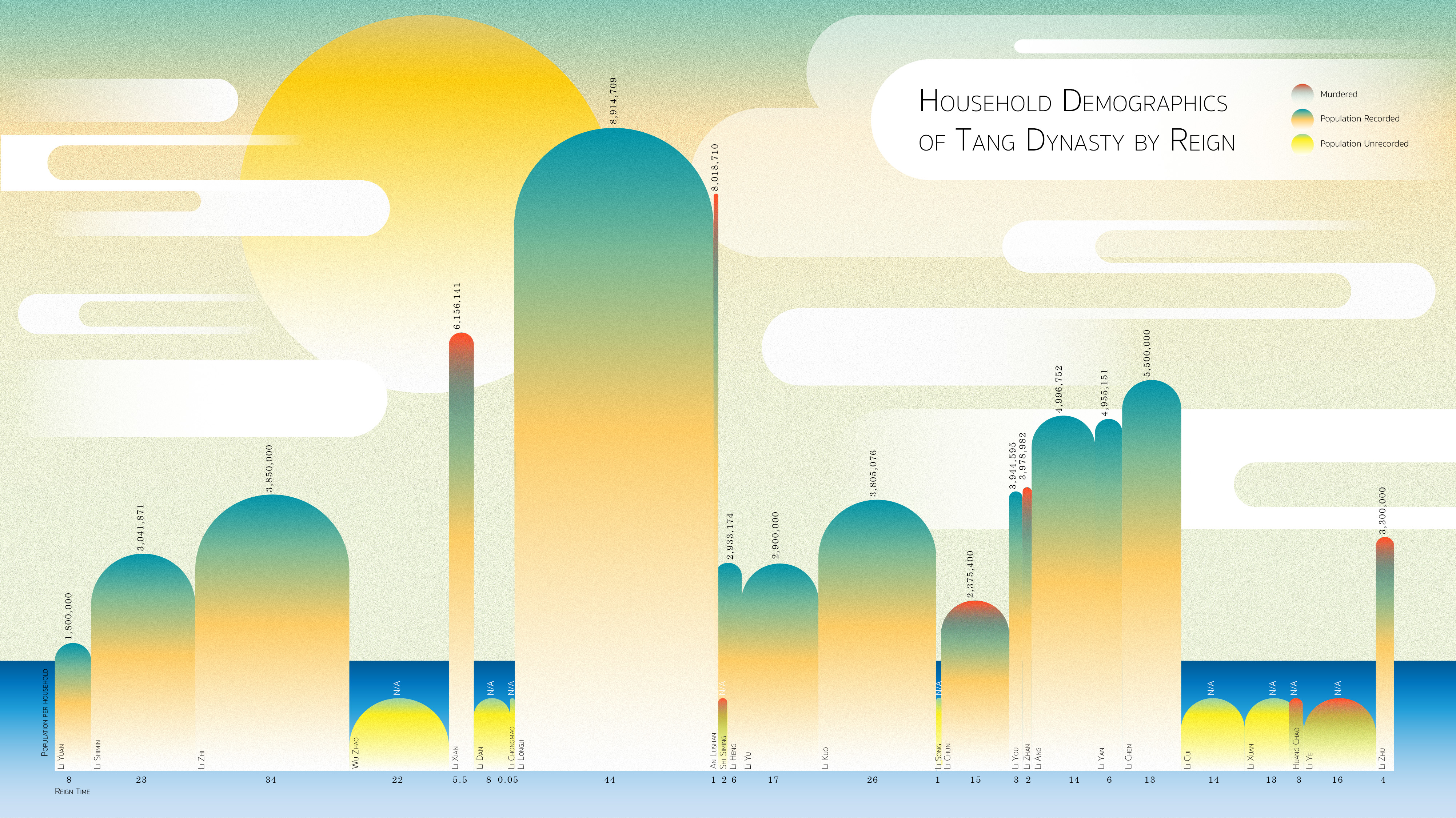
This chart, created using Adobe Illustrator, visualizes the relationship between population and murder rate during each emperor's reign in the Tang Dynasty. To represent population, I used the shape of an island, which was inspired by the work of Wang Ximeng. Each island's size is proportional to the population during that period, and the bar chart within the island shows the murder rate. For visual contrast, data with specific numbers are color-coded in a green-orange gradient, while periods without specific statistics are filled with green-yellow.
I made estimations for some periods based on descriptions of the reign in historical books, taking into account factors such as famines, revolts, and civil problems that could affect population. However, to ensure accuracy, I removed periods without sources as an unsourced data might mislead the audience.
The red peaks on the chart represent the emperors who were murdered. It is clear that murders often occurred during periods of political turmoil and population decline.

Citation
Durand, John D. “The Population Statistics of China, A.D. 2-1953.” Population Studies, vol. 13, no. 3, 1960, p. 209–, https://doi.org/10.2307/2172247.
Liu, Xu. Jiu Tang shu / Liu Xu deng zhuan Zhonghua shu ju Beijing 1975
Song, Qi. Xin Tang shu : [225 juan] / Ouyang Xiu, Song Qi zhuan Zhonghua shu ju Beijing 1975
Sima, Guang. and Boyang. Zi zhi tong jian / Boyang zhu [i.e. yi] Zhongguo you yi chu ban gong si : Xin hua shu dian Beijing fa xing suo fa xing [Beijing] 1984