Office Doctor
Product design
AR smart glasses helps prevents myopia.
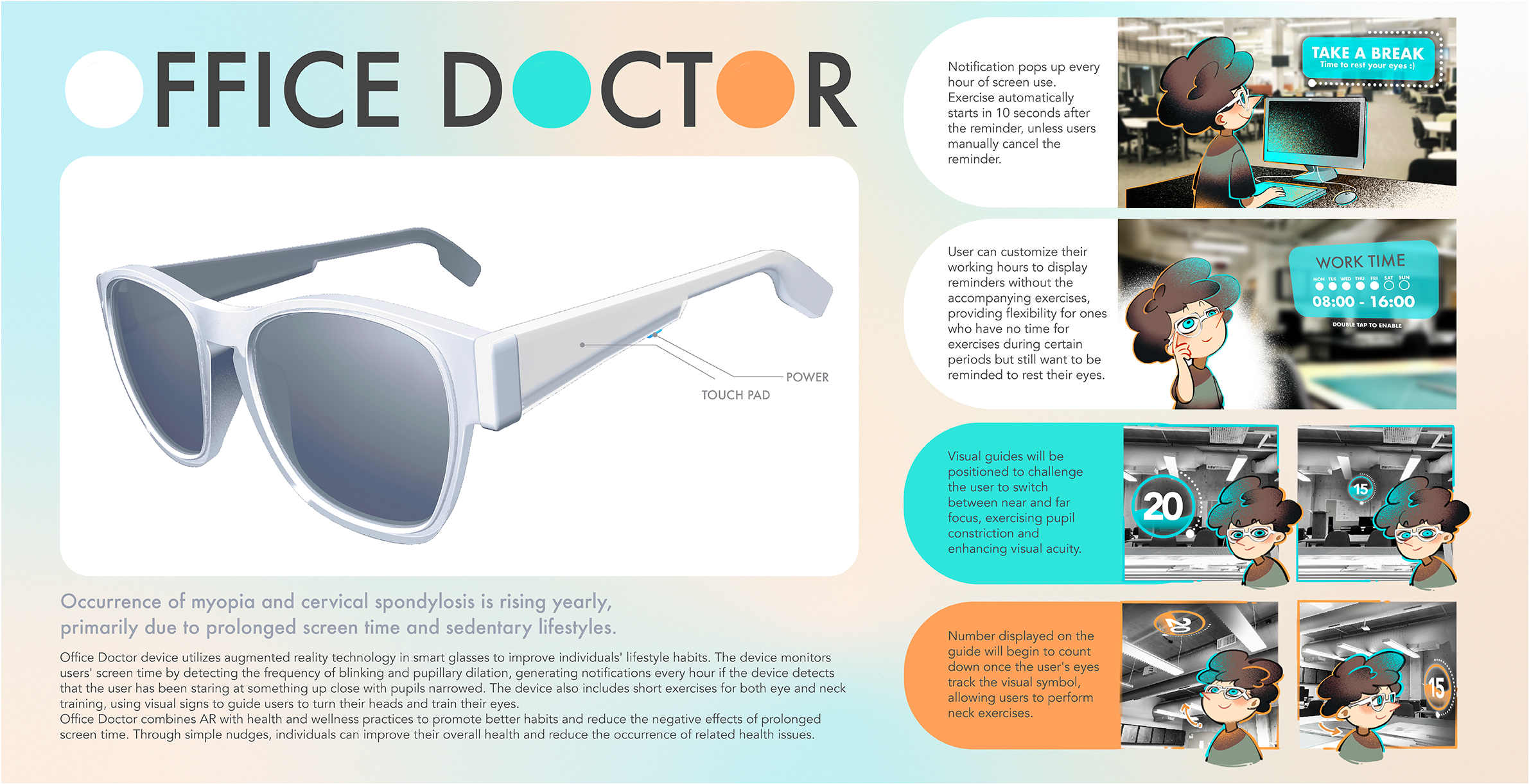
Office Doctor device utilizes augmented reality technology in smart glasses to improve individuals' lifestyle habits. The device monitors users' screen time by detecting the frequency of blinking and pupillary dilation, generating notifications every hour if the device detects that the user has been staring at something up close with pupils narrowed. The device also includes short exercises for both eye and neck training, using visual signs to guide users to turn their heads and train their eyes.
Adobe Stage
C4D
Blender
Occurrence of myopia and cervical spondylosis is rising yearly, primarily due to prolonged screen time and sedentary lifestyles.
Extended screen usage and improper posture during work can raise the likelihood of myopia and neck difficulties. A study estimated that around 60-90% of office workers could be affected by myopia, as many as 70% of office workers may experience neck pain at some point in their careers due to prolonged screen time and poor posture.Experiencing neck pain and vision loss is a widespread issue among students and office workers. However, maintaining a healthy lifestyle can be challenging for people in today’s fast-paced society to actively engage in preventative measures.
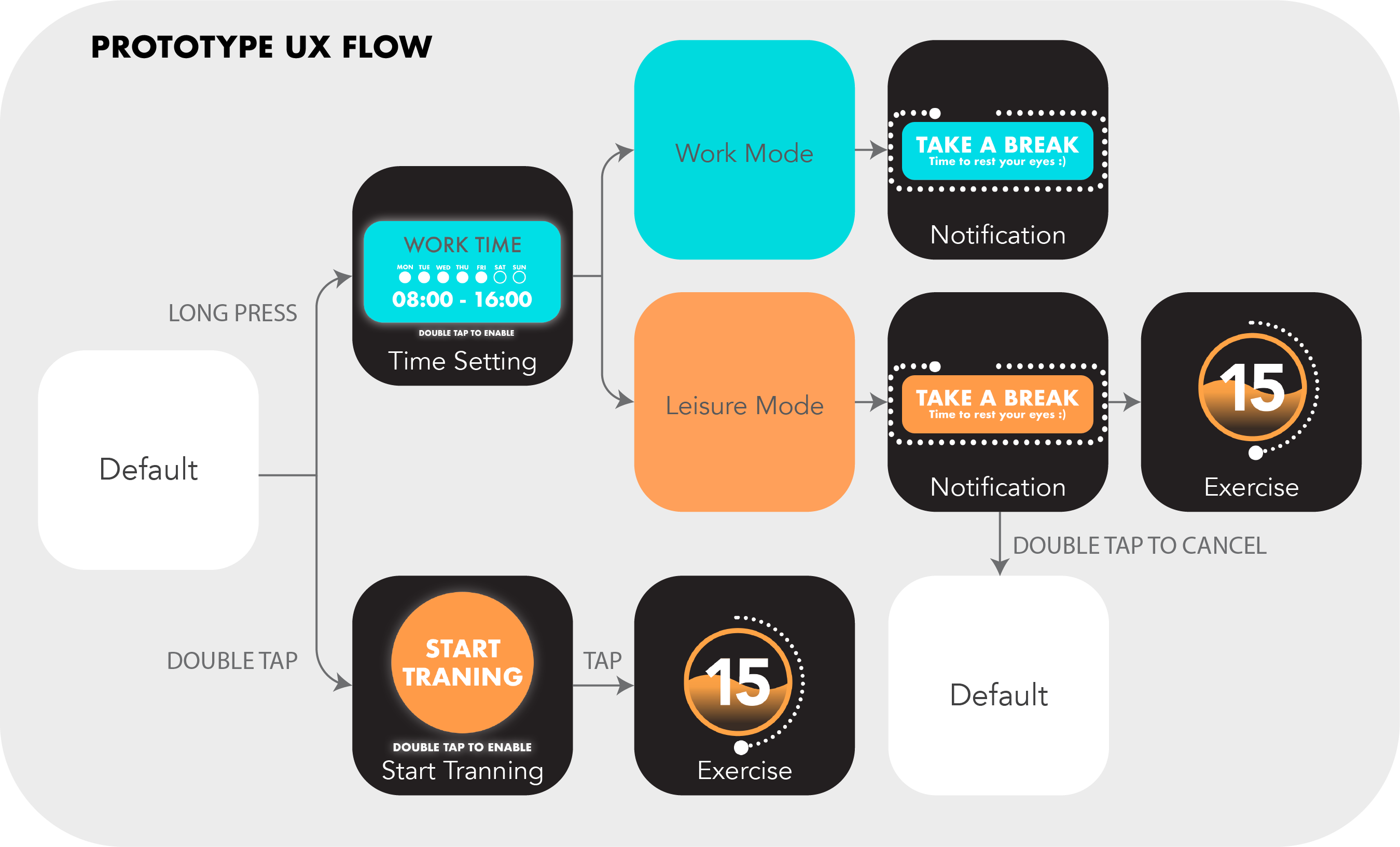
The Office Doctors provide users with two main features: notification and exercise, with two modes available for the exercise function:
leisure mode and work mode. In the first mode, notifications pop up every hour when the monitor
detects that users are using the screen, and exercise routines begin automatically 10 seconds after the reminder, unless the user cancels the notification manually.
.png)
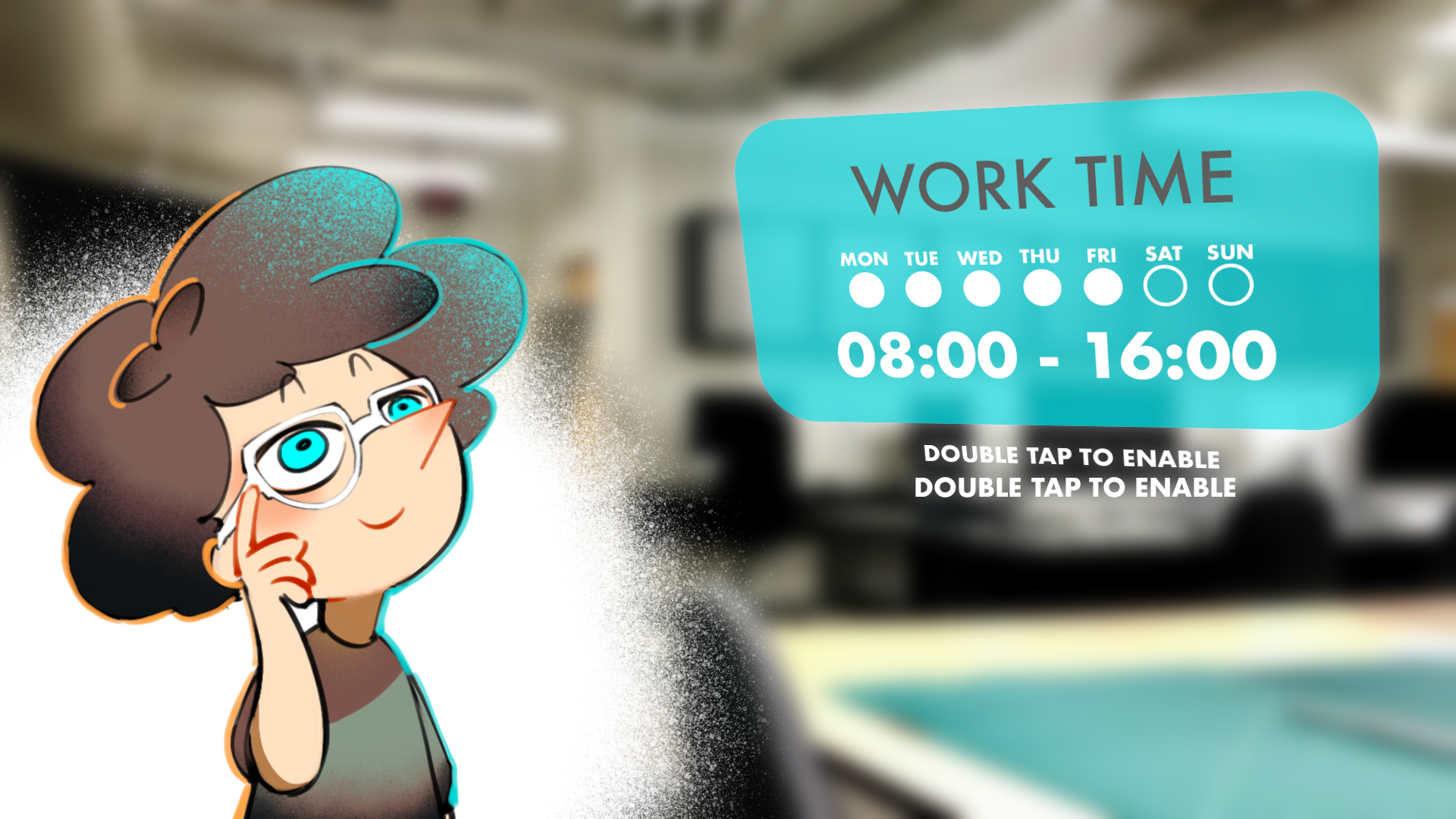
For the second mode, users can customize their working hours. In work mode, reminders are displayed without the accompanying exercises. This allows for greater flexibility for users who may not have time for exercises during certain periods, while still receiving reminders to rest their eyes.
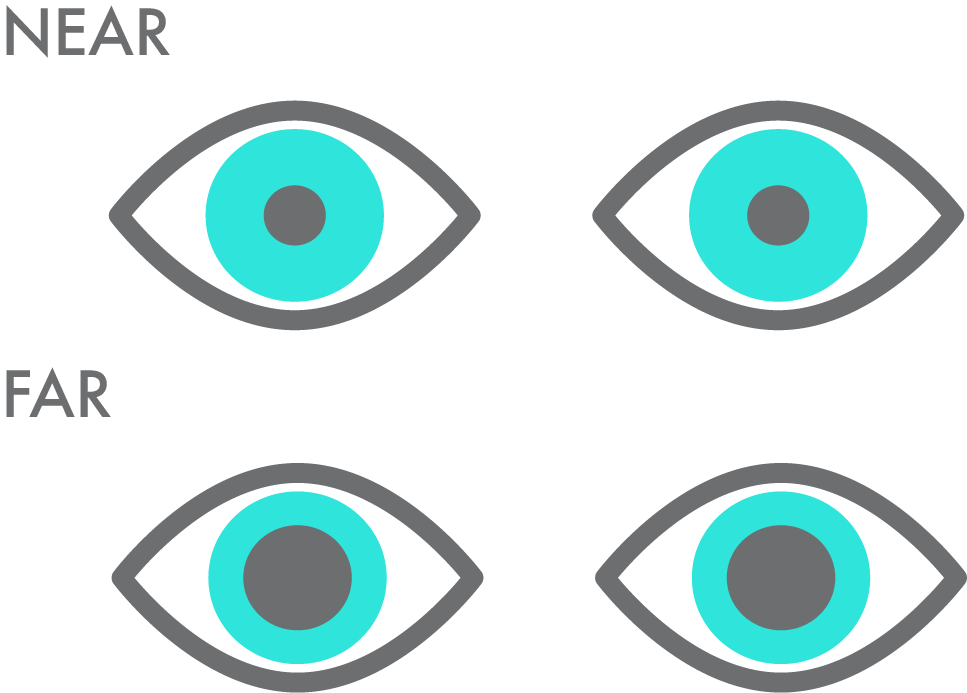
When focusing on nearby objects, our pupils constrict, for the opposite they dilate. Practising looking at objects both near and far can help relax eye muscles.
Office Doctor uses a combination of blink frequency and pupil constriction to detect is the user is engaged in prolonged screen-based activities. This allows the system to avoid interrupting users who are driving, where the pupils dilated due to focusing on distant objects.
what is the prevention?
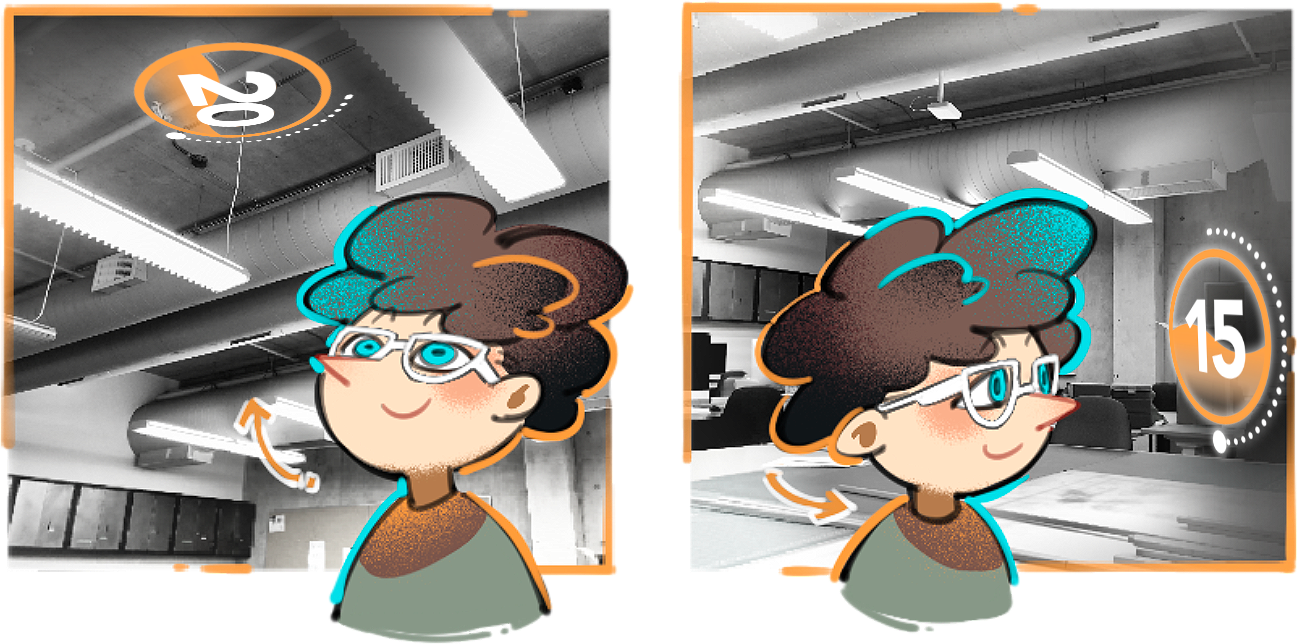
The 20-20-20 rule is a popular exercise for protecting your vision. It involves looking at something 20 feet away for 20 seconds every 20 minutes to give your eye muscles a break from prolonged screen time. To facilitate this exercise, Office Doctor has implemented an AR visual guidance that directs users to look at various distances. A number displayed on the guide counts down once the user's eyes track the visual symbol, which then reappears in different positions, allowing users to rotate their eyeballs and neck.
How did people get myopia?
Extended near work such as reading on screens or paperbacks can cause elongation of the eyeballs, leading to myopia or nearsightedness, prevents the eye from properly bending light and results in blurred vision when viewing distant objects.
Visual guides will be positioned to challenge the user to switch between near and far focus, exercising pupil constriction and enhancing visual acuity.
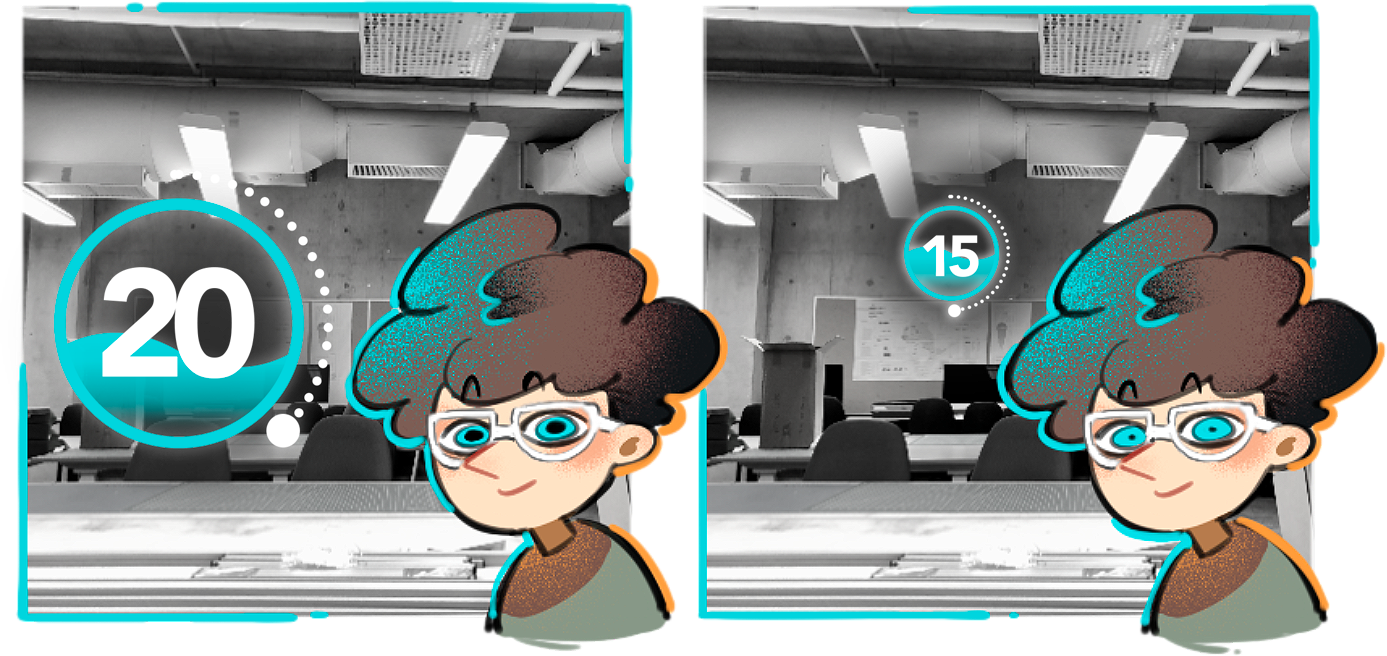
Visual guides will be positioned to challenge the user to switch between near and far focus, exercising pupil constriction and enhancing visual acuity.